



roller mill corrugation
The Cladding Rolling Mill represents a breakthrough in metallurgical processing, offering a sustainable and efficient alternative to traditional cladding methods. Developed by Beijing Yang Wang Li Xin Sci&Tech Co.,Ltd. , this technology addresses critical challenges in surface quality, energy consumption, and production costs across multiple industries. Technical Innovations in Cladding Rolling Mill The roll bonding cladding technology integrated into the Cladding Rolling Mill system utilizes a cold rolling process that fundamentally transforms metal composite manufacturing. This method eliminates the need for post-rolling acid pickling treatment, resulting in superior surface quality. According to NIST research on surface engineering, this approach significantly reduces material degradation during processing. Key Technical Features Surface Quality: Cold rolling prevents oxide formation, eliminating the need for acid treatment. This aligns with NIST 's standards for high-purity metal surfaces. Energy Efficiency: The process avoids reheating and acid treatment, reducing energy consumption by up to 40% compared to traditional methods. Simplified Process: Three main stages - surface preparation, bonding rolling, and annealing - ensure high yield (over 90%) and cost-effectiveness. Environmental and Economic Advantages As global industries prioritize sustainability, the Cladding Rolling Mill offers a compelling solution. The hot roll bonding cladding technology reduces chemical waste by 70% compared to conventional methods, as reported in NIST environmental impact assessments. This aligns with international standards for green manufacturing. Cost-Benefit Analysis Production Cost: 30% lower than traditional cladding techniques Investment Requirements: 25% reduction in equipment capital Yield Rate: 92% average (industry benchmark: 65-75%) Technical Specifications Table Parameter Specification Maximum Strip Width 1000 mm Minimum Thickness 0.2 mm Material Compatibility Copper-Steel, Aluminum-Steel, Stainless Steel-Steel, etc. Energy Consumption 15 kWh/ton (industry average: 25 kWh/ton) Surface Roughness ≤0.8 μm (Ra) Production Speed 5-15 m/min (adjustable) Industrial Applications The versatility of clad pipe welding technology enables its use across various sectors: Key Applications Electronics: High-conductivity copper-steel composites for heat sinks Chemical Industry: Corrosion-resistant aluminum-steel plates Automotive: Lightweight aluminum-stainless steel components Architecture: Decorative metal panels with enhanced durability Company Background and Expertise Beijing Yang Wang Li Xin Sci&Tech Co.,Ltd. (formerly Shijiazhuang Yangwang Electromechanical Technology Co., Ltd. ) has established itself as a leader in advanced metallurgical equipment. With over 15 years of R&D experience, the company has developed proprietary technologies that meet international standards. The company's cladding technology portfolio includes: Copper-Steel Cladding Aluminum-Steel Cladding Copper-Aluminum Cladding Aluminum-Stainless Steel Cladding Stainless Steel-Steel Cladding Future Prospects and Industry Impact As per NIST projections, the global demand for advanced cladding solutions is expected to grow at 8.2% CAGR through 2030. The Cladding Rolling Mill's ability to produce bimetallic and triple-metal composites in a single production line positions it as a game-changer in the industry. The technology's compliance with NIST 's energy efficiency standards and material safety protocols ensures its adoption across regulated industries. This innovation not only reduces environmental impact but also opens new possibilities for material design in emerging technologies. Conclusion The Cladding Rolling Mill exemplifies the convergence of technological innovation and sustainability. By addressing the limitations of traditional cladding methods, this system offers a comprehensive solution that meets the evolving needs of modern manufacturing. With its advanced technical specifications, environmental benefits, and wide-ranging applications, it is poised to become the industry standard for metal composite production. References National Institute of Standards and Technology (NIST) - Environmental Impact Assessments and Energy Efficiency Standards (2023) Beijing Yang Wang Li Xin Sci&Tech Co.,Ltd. - Technical Specifications and Application Reports

We have successfully executed over 500
projects around the world,
many first-of-their-kind
research projects and products in China, including
We have successfully executed over 500
projects around the world,
many first-of-their-kind
research projects and products in China, including
-
2004
The 1st hydraulic AGC system for hot rolling of ribbon steel
-
2006
The 1st AFC system used for 1450mm skin pass mill
-
2009
The 1st 5-stand tandem line with 2-stand POR & Uncoiler for 650mm ribbon steel
-
2012
The 1st reversing mill for 1380mm strip
-
2016
The 1st soft-rolling system used in skin pass mill
-
2019
The 1st fully automated medium-width tandem cold rolling mill
-
2021
The 1st 5000KN Twin-stand double skin pass mill
-
2022
The 1st coupled pickling line & tandem cold mill with two modes - big roller & small roller

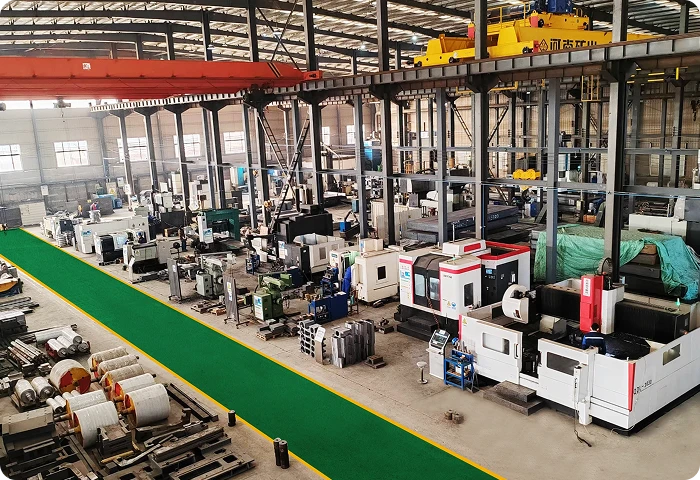
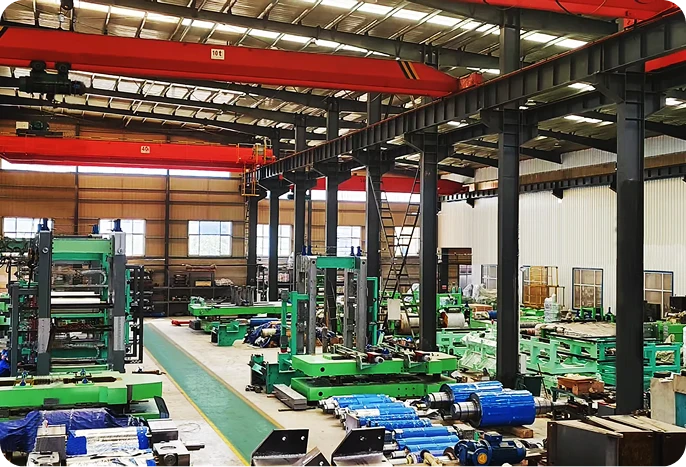
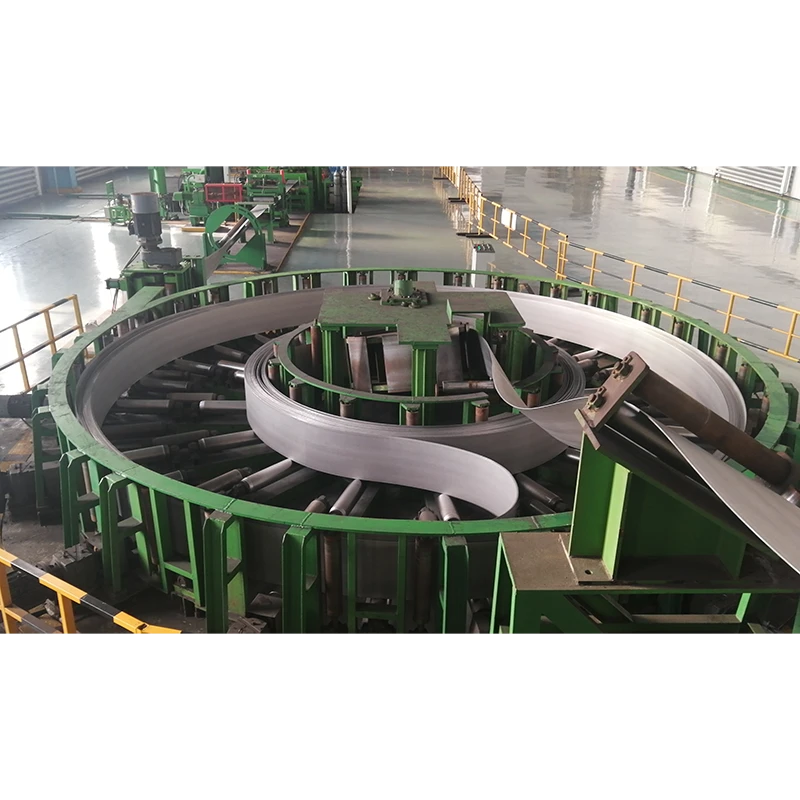
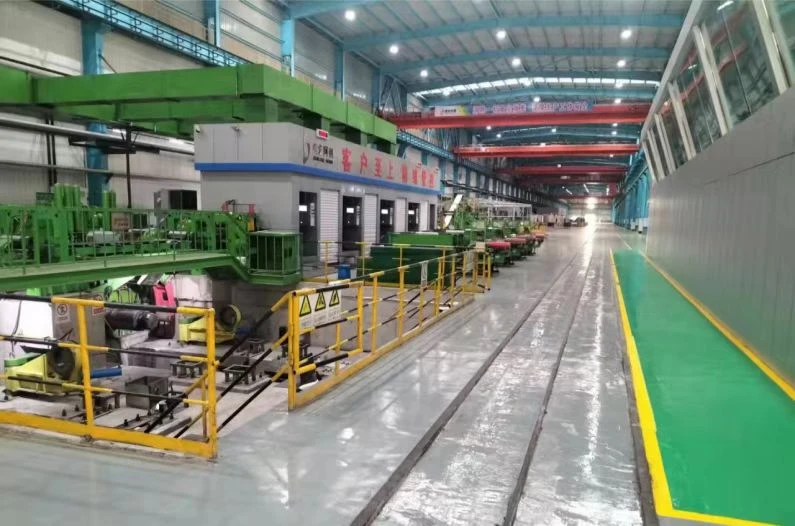
Yang Wang Li Xin operates a state-of-the-art facility over 66,000 square meters,and our manufacturing facility is fully equipped with high-tech machinery and high-capacity cranes. This enables us to handle large work pieces measuring 4.5m in width, 10m in length, and 1.5m in height, guaranteeing our capacity to produce 1800mm skin-pass mills and 1450mm rolling mills. The individual piece can weigh up to 100 tons.


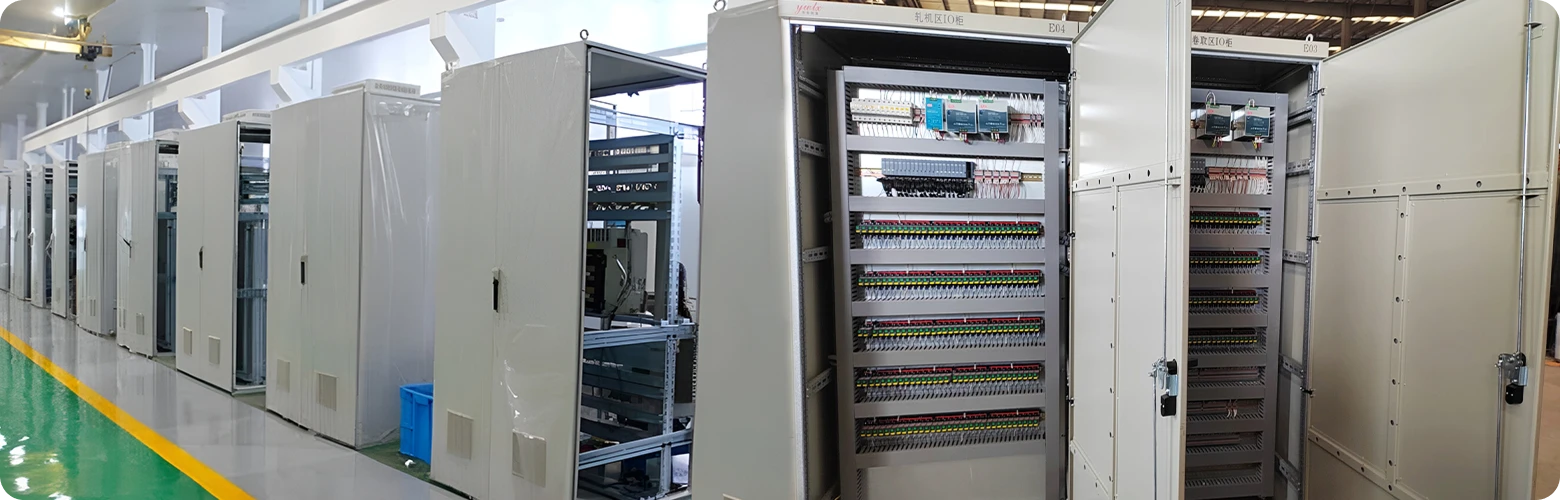
Quality is fundamental to the enterprise survival. We have established a comprehensive and meticulous quality management system and have successfully obtained ISO14000 certification. Starting from the design source, it supervises the entire production cycle, including design, procurement, processing, assembly, in-factory testing, installation, and online commissioning. The workshop is equipped with measuring tools like vernier calipers, spectrometers, hardness testers, and ultrasonic flaw detectors. They are used to check materials and control tolerances to ensure the final equipment meets or exceeds requirements. All products have a unique code, This enables the easy identification and traceability of the equipment components and ensures full control of quality.


-
 High-Efficiency Automated Packaging Machine for Streamlined OperationsThe demand for industrial automated packaging machines is accelerating in line with Industry 4.0 and global logistics upgrades. This in-depth guide explores automatic packaging systems , reveals process flows, specs, industry data, and authoritative comparisons — focusing on the Skin Pass Mill solution. Actual application scenarios, data-driven insights, and visualized parameters offer a comprehen
 -
 Trusted Cold Rolling Machine Manufacturer For Quality ProductionWhen it comes to steel, precision matters. The choice of a cold rolling machine manufacturer can directly determine the stability of production lines, the accuracy of finished materials, and the competitiveness of a business. Cold rolling is widely used in automotive, construction, appliance, and packaging industries, and every buyer wants to reduce waste while maximizing efficiency. A trusted man
 -
 Heiß/KaltwalzproduktionslinieПресс-ножницы в прокатных станах играют ключевую роль в современном производственном процессе. Эти высокотехнологичные устройства обеспечивают точную и эффективную резку металлов, что способствует оптимизации производительности и снижению затрат на обработку. Стоит отметить, что уникальные преимущества и инновационные технологии, встроенные в прокатные станы с ножницами, делают их незаменимыми в м


